March 22, 2026
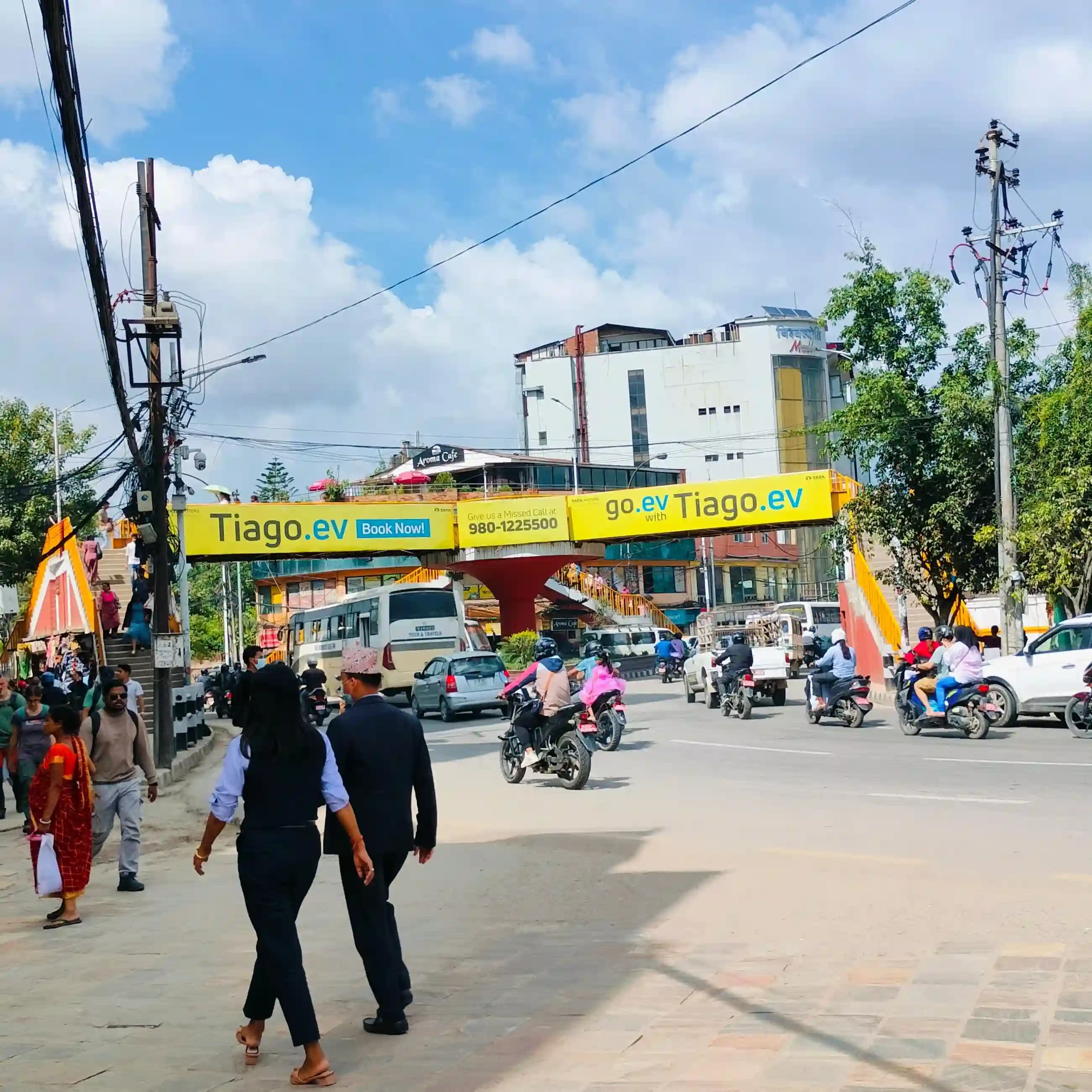
Here's something you've probably done without even realizing it: every time you drive or ride under an overhead bridge, you glance up. It's almost automatic — checking for oncoming height, or just naturally following the structure with your eyes as you pass under it. That small, automatic habit is exactly why overhead bridge ads work so well.
Unlike a hoarding board on the side of the road, which competes with shops, other signs, and everything else in your peripheral vision, an overhead bridge ad has a moment almost entirely to itself. For the two or three seconds a driver looks up, there's nothing else competing for that same space in their eyes.
Overhead bridges also sit at some of the busiest traffic points in any city, because that's exactly why bridges get built there in the first place — heavy junctions, major roads, places where thousands of vehicles pass every single day. An ad in that spot isn't reaching a random slice of traffic. It's reaching the exact crowd stuck at the busiest, most repeated part of their daily commute.
And repetition is the real power here. Someone who drives under the same bridge every morning on their way to work will see your ad, without fail, five or six days a week. That kind of steady repeat exposure is hard to get from almost any other advertising format, online or offline.
Because the viewing moment is so short, the message needs to be simple — a name, a logo, maybe one short line. This isn't the place for a long list of services. It's the place for the one idea you most want stuck in someone's head by the time they're stuck in traffic later thinking about lunch.
If your business depends on being remembered by the same commuters, day after day, an overhead bridge spot might be doing more for your brand than you'd expect from something people only glance at for a couple of seconds.